Water Color Backgrounds for Invitations & Digital Design
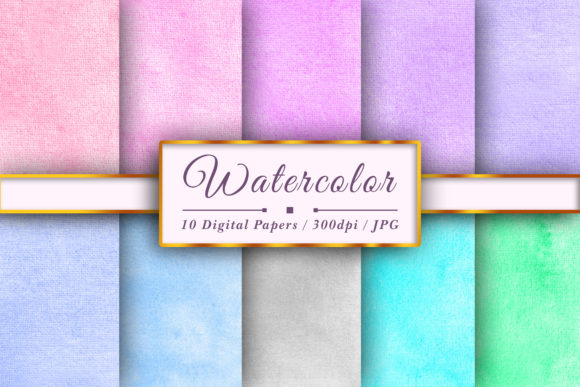
The search for the perfect texture often ends up in frustration. You want something that feels handmade and organic, but the reality of printing or web design requires high-resolution files that don't pixelate. This is exactly why the Water Color Backgrounds and Mosaic Abstract set has become such a staple in my design toolkit. It bridges that difficult gap between raw, artistic beauty and the technical requirements of modern digital paper packs. When you look at these designs, you don't just see a color; you see the flow of the pigment, the way it bleeds naturally at the edges, and the unique granulation that only watercolor can provide.
These aren't static, flat images. They possess a distinct personality—fluid, soft, and vibrant. Whether you are working on a delicate wedding invitation or a bold blog header, the visual appeal of watercolor remains timeless. It suggests a level of care and artistic flair that standard solid colors or geometric patterns simply cannot match. For designers and entrepreneurs, this digital paper pack offers a way to inject "soul" into a project instantly.
The Anatomy of the Mosaic Abstract
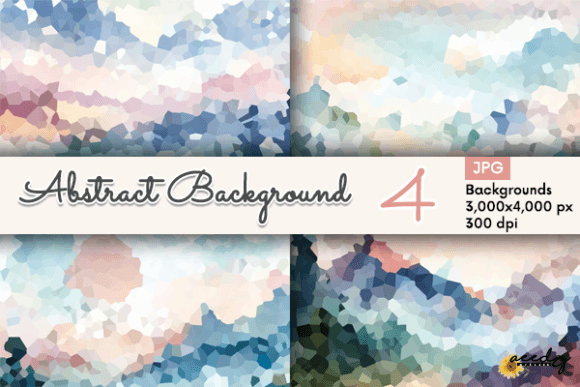
While standard watercolor washes are lovely, the "Mosaic Abstract" element of this collection adds a layer of modern sophistication. Instead of a simple gradient, you are dealing with a composition that feels structured yet chaotic, much like shattered glass or stained glass windows. This specific style works incredibly well for brand identity projects where you need to stand out. A mosaic texture implies complexity and depth, making it a fantastic choice for packaging design or editorial design where the background needs to support heavy text without looking boring.
From a technical standpoint, the quality here is non-negotiable. We are talking about 3,000 x 4,000 pixels at a crisp 300 DPI. If you have ever tried to print a low-res texture on a large canvas, you know the disappointment of seeing jagged edges. With these files, you can scale up for physical wall art or scale down for mobile screens, and the integrity of the image remains intact. The high resolution ensures that the delicate brushstrokes remain sharp, giving your printables and photo albums a professional, tactile feel even though they are digital prints.
Real-World Applications for Creatives
One of the biggest challenges for small business owners and content creators is versatility. You need assets that can do double duty. A pack of Water Color Backgrounds is arguably one of the most versatile design assets you can own. Here is how I recommend using them across different mediums:
- Wedding Invitations & Stationery: Watercolor is the gold standard for wedding suites. It feels romantic and elegant. Use the mosaic patterns for envelope liners or belly bands to add a modern twist to a traditional style.
- Web Design & Blogs: In the digital space, load times matter, but so does "thumb-stopping" power. These backgrounds make excellent hero sections or header images. Because they are abstract, they don't distract from the text but provide a rich, colorful foundation that keeps the page from feeling sterile.
- Scrapbooking & Paper Crafts: For the hobbyist, these files are a dream. You can print them out on cardstock to create your own physical embellishments, die-cuts, or background layers for memory keeping. The "print as many as you want" license is crucial here—you aren't limited by a per-project fee.
- Social Media Graphics: Consistency is key on platforms like Instagram. Using these backgrounds as a recurring motif for quotes, announcements, or sale posts helps build a cohesive visual hierarchy that followers will recognize instantly.
Strategic Integration and Brand Perception
Choosing a background is rarely just about aesthetics; it is about psychology. The use of watercolor in graphic design often signals creativity, flexibility, and approachability. If you are a life coach, a yoga studio, or an artisan shop, these textures align your brand perception with organic growth and mindfulness. Conversely, the mosaic aspect adds a layer of structure, suggesting that while you are creative, you are also organized and detailed.
When integrating these backgrounds into your workflow, think about font pairing. A busy, vibrant mosaic background requires a typeface that commands attention but remains legible. I often recommend using a clean sans serif font or a bold serif font for headers to cut through the visual noise. Avoid overly ornate script fonts or handwritten fonts directly on top of the densest parts of the watercolor wash, as readability will suffer. Instead, place your text over the lighter areas of the gradient, or use a semi-transparent overlay to create breathing room.
Practical Guide to File Management and Editing
Because this is a digital paper pack delivered as a Zip file containing 4 JPG files, the barrier to entry is incredibly low. You do not need complex software to use them. They are compatible with everything from Adobe Photoshop and Illustrator to Canva, Procreate, and even basic word processors.
- Color Adjustment: Don't settle for the default colors if they don't match your palette. In almost any editor, you can adjust the "Hue/Saturation" to shift the watercolor from a cool blue to a warm terracotta in seconds. This allows one pack to serve multiple seasons and campaigns.
- Layering Techniques: Experiment with blend modes. Placing a texture over a solid color and selecting "Multiply" or "Overlay" can create entirely new variations. This is particularly useful for wallpaper or gift wrapping designs where you need a seamless, repeating pattern feel.
- Masking: Use layer masks to reveal the watercolor only within specific shapes, such as text or silhouettes. This turns the background into a foreground element, perfect for logo design accents or unique shop tags.
Maximizing Your Investment
Ultimately, the value of a premium font or texture pack lies in its longevity. These Water Color Backgrounds are not trend-dependent in the way that neon colors or specific geometric shapes might be. Watercolor has been used in art and design for centuries. By investing in high-quality, high-resolution files now, you are building a library of assets that will remain relevant for years to come.
Whether you are designing a planner cover, creating fabric patterns, or refreshing your website, the tactile quality of these digital papers adds a layer of professionalism that audiences can feel, even through a screen. It moves your work from "digital" to "artistic," ensuring that your projects not only look good but feel intentional and crafted. Take the time to explore the full potential of the Zip file; the creative possibilities are as fluid as the medium itself.